SpaceX announces $100 billion Starbase Louisiana launch facility
The new site in Vermilion Parish will feature 10 launch pads and aim to support over 10,000 Starship flights annually.
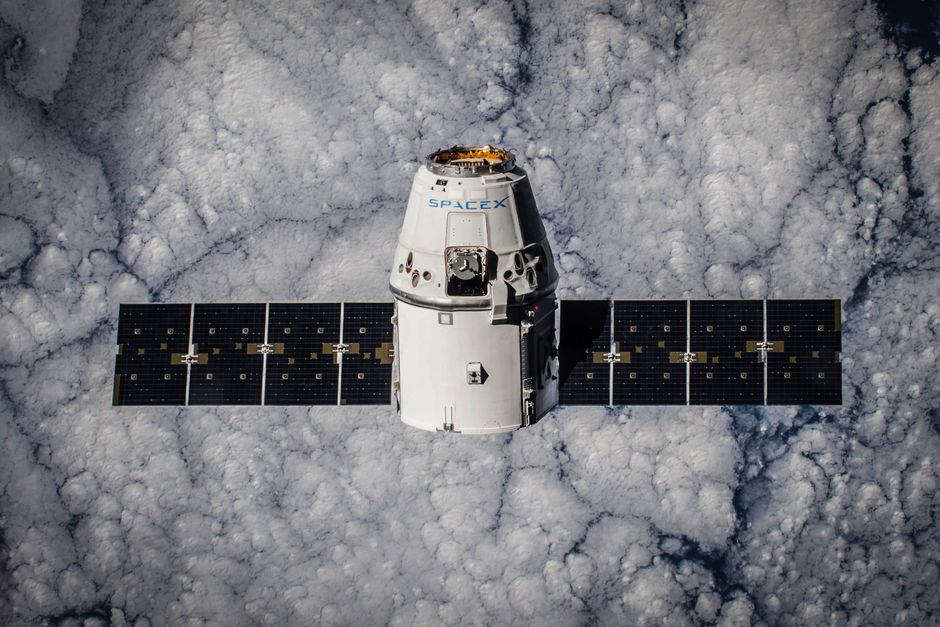
SpaceX has announced a $100 billion investment in Vermilion Parish to establish “Starbase Louisiana,” a massive manufacturing and launch complex for the company’s Starship rocket. The facility is intended to serve as SpaceX’s primary hub for spaceflight operations, designed to accommodate an increased launch cadence that Elon Musk suggests could exceed 30 flights per day by 2030. According to Space.com, this equates to a target of more than 10,000 flights per year.
Facility Specifications and Infrastructure
The Louisiana site will comprise five complexes, each containing two Starship towers for a total of 10 launch pads. Each pad will be equipped with its own propellant farm, allowing the facility to produce fuel onsite. According to Space.com, SpaceX President Gwynn Shotwell stated that the port will be self-sustaining, incorporating power generation, vehicle processing facilities, an airport, and deep-water shipping capabilities. The project is situated in an area known as Pecan Island, providing SpaceX with approximately 125,000 acres of land access.
While Space.com reports the facility will feature 10 launch pads, Musk noted on X that the site will “ultimately have over a dozen launch towers,” according to Phys.org. Construction is scheduled to begin in 2027, with SpaceX targeting its first launch from the Louisiana coast by 2029.
Orbital Logistics and Mission Goals
The geographic location offers specific technical advantages for Starship missions. The site provides proximity to the Intracoastal Waterway, allowing for deep-water transport of rockets and payloads. It is also positioned relatively close to SpaceX’s existing “Starfactory” in Boca Chica, South Texas, reachable via barge.
From a trajectory standpoint, the southward-facing location facilitates access to polar orbits. While equatorial orbits move west to east, polar orbits travel north to south. According to Ars Technica, a Starship departing from Louisiana can reach a polar orbit with a traverse over Mexico of approximately 1,000 miles downrange. This is significant for SpaceX’s orbital data center satellites, which are expected to occupy near-polar orbits.
The facility will support several distinct mission profiles:
- Artemis Program: The site will support the refueling requirements for NASA’s Artemis IV mission. A single Starship may require up to a dozen “tanker” flights to carry out lunar missions beyond low Earth orbit, according to Space.com.
- Starlink Expansion: SpaceX plans to transition its next-generation internet satellite constellation to Starship. The company intends to retire the Falcon 9 rocket entirely once Starship is operational. To date, Falcon 9 has completed over 300 Starlink missions and delivered more than 11,000 satellites.
- Space-Based Computing: Shotwell indicated that the site will support infrastructure for moving supercomputing to space to meet artificial intelligence demands, according to Space.com.
Economic and Environmental Context
The project is expected to create significant economic activity in Vermilion Parish. The Louisiana Economic Development agency reports that the average salary for workers at the facility would be 192% more than the current regional mean wage, with SpaceX promising between 3,000 and 10,000 local jobs as it builds out a support city.
The site became available following a legal settlement involving ExxonMobil regarding coastal land loss and pollution. Because Louisiana loses one to three meters of coastline annually due to erosion, SpaceX plans to partner with state and federal agencies on the Coastal Master Plan. According to Ars Technica, these efforts will include shoreline protection breakwaters, marsh restoration, and wildlife conservation in an area that supports various waterfowl species.
Analysis and Outlook
The reports collectively highlight a significant shift in SpaceX’s operational strategy: moving from the current Texas-centric operations to a high-volume, multi-purpose hub. While the sources agree on the $100 billion investment and the 2027 construction start date, they vary slightly on specific infrastructure counts (10 pads vs. “over a dozen”).
The transition from Falcon 9 to Starship represents a fundamental change in SpaceX’s business model. By moving Starlink deployment to Starship, the company seeks to eliminate the overhead of maintaining the Falcon 9 fleet while simultaneously preparing for high-frequency lunar and interplanetary missions. The reliance on onsite natural gas for propellant production further ties the company’s launch cadence to Louisiana’s industrial resources.
Watch for updates regarding environmental impact assessments, as SpaceX has already begun working with state wildlife agencies to evaluate the industrial complex’s footprint along the Gulf Coast.